Four editions, kindergarten to high school. Made for one child at a kitchen table or twenty in a co-op.
START WITH WHAT WENT WRONG.
Ten pages. One amendment each. Every one of them exists because something happened to somebody, and this book starts there instead of with the definition.
If you scanned the square in the back of your booklet, this is the page it promised: the other three editions, the shelf, and the list.
Every amendment in the Bill of Rights began as a complaint. Somebody was jailed for printing, taxed for a church they did not attend, searched without cause, or made to feed soldiers in their own kitchen. The Bill of Rights is the list of things that had already gone wrong. Here is the complaint behind each one, the way the booklet tells it to a third grader.
Amendment 1
Five Freedoms
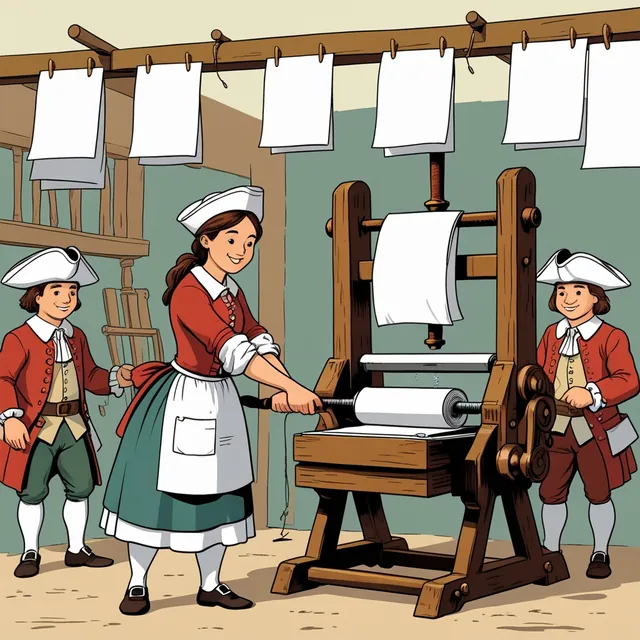
A printer could be jailed for what she printed. A family paid taxes to a church they did not attend. People were arrested for meeting to complain. All of that is in one sentence now, turned around.
Read the amendment
Congress shall make no law respecting an establishment of religion, or prohibiting the free exercise thereof; or abridging the freedom of speech, or of the press; or the right of the people peaceably to assemble, and to petition the Government for a redress of grievances.
Amendment 2
Ready in a Minute
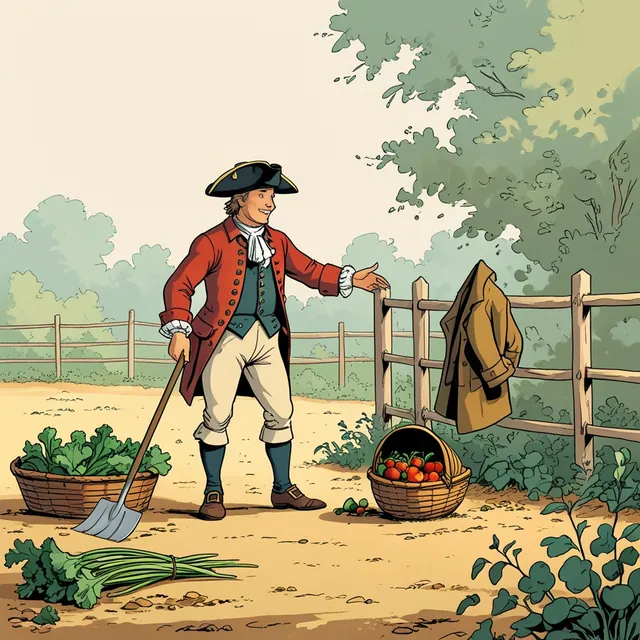
In 1775 there was no standing army to call. A town's defense was the town's own farmers, using what they already owned at home. They were called minutemen because that is how long they had to be ready.
Read the amendment
A well regulated Militia, being necessary to the security of a free State, the right of the people to keep and bear Arms, shall not be infringed.
Amendment 3
Whose Barn Is It?
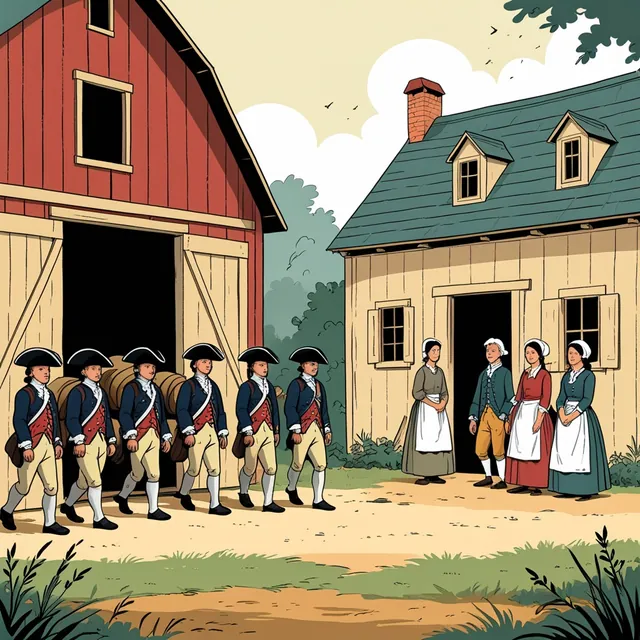
Here is what most books get wrong. The law did not let soldiers move into your kitchen. It let the governor take your barn, your shed, and any empty building you owned, and you could not say no. You also had to help feed the soldiers.
Read the amendment
No Soldier shall, in time of peace be quartered in any house, without the consent of the Owner, nor in time of war, but in a manner to be prescribed by law.
Amendment 4
Ask First
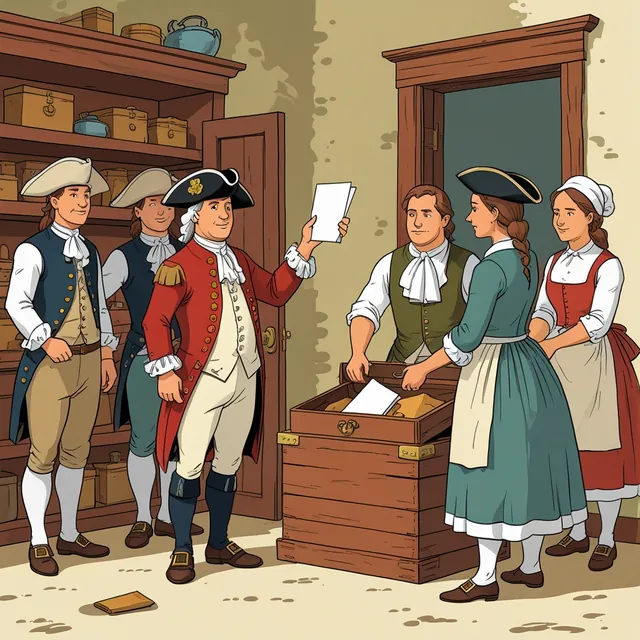
Customs officers carried a paper called a writ of assistance. It let them search any house, any shop, any chest, for anything, on any day. It never ran out. It did not have to say what they were hunting for.
Read the amendment
The right of the people to be secure in their persons, houses, papers, and effects, against unreasonable searches and seizures, shall not be violated, and no Warrants shall issue, but upon probable cause, supported by Oath or affirmation, and particularly describing the place to be searched, and the persons or things to be seized.
Amendment 5
Five Rules in One
Most people know one piece of this amendment from television. There are five. It is the longest one in the Bill of Rights because five different bad things all needed stopping at once.
Read the amendment
No person shall be held to answer for a capital, or otherwise infamous crime, unless on a presentment or indictment of a Grand Jury, except in cases arising in the land or naval forces, or in the Militia, when in actual service in time of War or public danger; nor shall any person be subject for the same offence to be twice put in jeopardy of life or limb; nor shall be compelled in any criminal case to be a witness against himself, nor be deprived of life, liberty, or property, without due process of law; nor shall private property be taken for public use, without just compensation.
Amendment 6
Not Far Away
Colonists could be put on a ship and tried in Britain, three thousand miles from anyone who saw what happened. No neighbor could speak for you. The Declaration of Independence listed that as a complaint.
Read the amendment
In all criminal prosecutions, the accused shall enjoy the right to a speedy and public trial, by an impartial jury of the State and district wherein the crime shall have been committed, which district shall have been previously ascertained by law, and to be informed of the nature and cause of the accusation; to be confronted with the witnesses against him; to have compulsory process for obtaining witnesses in his favor, and to have the Assistance of Counsel for his defence.
Amendment 7
Who Decides?
This one is not about crime at all. It is about arguments over money and property. In the colonies, some courts decided those with one royal judge and no jury. So they wrote down that twelve ordinary neighbors get to decide instead.
Read the amendment
In Suits at common law, where the value in controversy shall exceed twenty dollars, the right of trial by jury shall be preserved, and no fact tried by a jury, shall be otherwise re-examined in any Court of the United States, than according to the rules of the common law.
Amendment 8
Is It Fair?
A punishment should match what was done, the way two sides of a scale should match. Too big is not allowed. What counts as too big has changed a lot since 1791.
Read the amendment
Excessive bail shall not be required, nor excessive fines imposed, nor cruel and unusual punishments inflicted.
Amendment 9
Not On The List
Some of the founders did not want a Bill of Rights at all. Their worry was simple. If you write down eight freedoms, somebody will later say those eight are the only ones you get. So they added a ninth that says the opposite.
Read the amendment
The enumeration in the Constitution, of certain rights, shall not be construed to deny or disparage others retained by the people.
Amendment 10
Near and Far
Thirteen states had just finished fighting a government far across an ocean. They were not eager to build another distant government with unlimited power. So the last amendment says it plainly. If we did not hand it over, we kept it.
Read the amendment
The powers not delegated to the United States by the Constitution, nor prohibited by it to the States, are reserved to the States respectively, or to the people.
Different ages, different demands
FOUR WAYS IN.
Four grade bands are designed. Three editions have direct public TPT listings; the high-school link goes to the store.
Kindergarten to Grade 2
The grown-up reads the strip out loud. Your child colors the picture, circles the answer, and draws what comes next. The answer is printed on the page, so nobody is guessing.
You do not need any of these to use the booklet. Here are nine reading suggestions, from a pocket Constitution for the family to 1776 for the parent reading along. Look for them at your library or favorite bookseller.
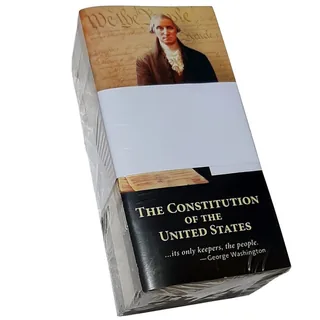
Pocket Constitution (25 Pack)
National Center for Constitutional Studies
A set a co-op leader can share among families.
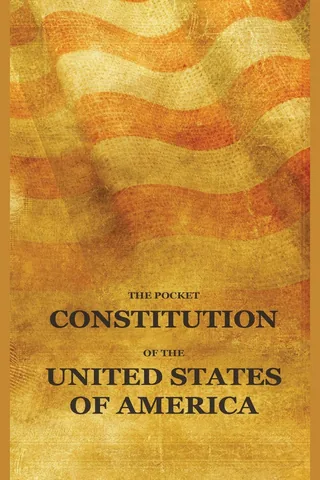
The Pocket Constitution of the United States of America
Createspace Independent Publishing Platform
A reading recommendation to explore alongside the amendments.
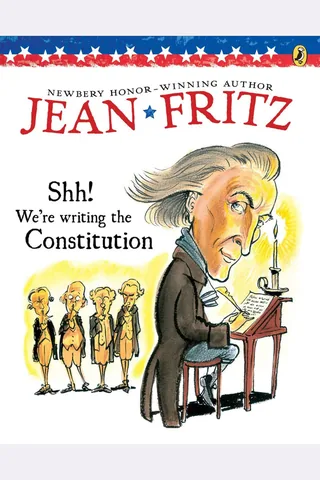
Shh! We're Writing the Constitution
Jean Fritz
A reading recommendation to explore alongside the amendments.
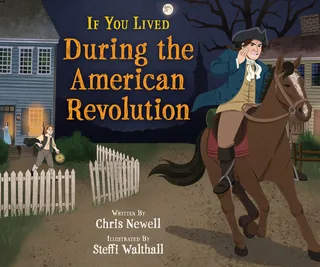
If You Lived During the American Revolution
Chris Newell
A reading recommendation to explore alongside the amendments.
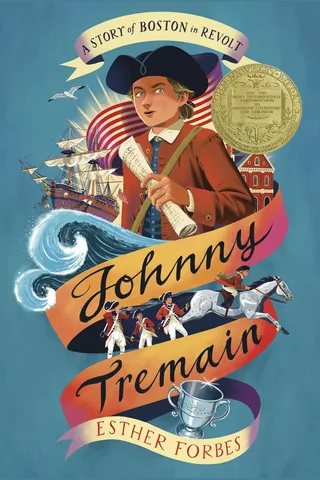
Johnny Tremain
Esther Forbes
A reading recommendation to explore alongside the amendments.
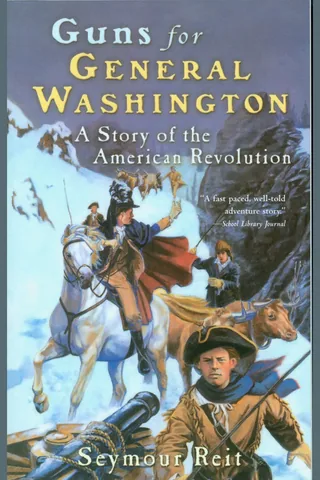
Guns for General Washington
Seymour Reit
Grades 5 to 7. The story of bringing the guns from Fort Ticonderoga to Boston.
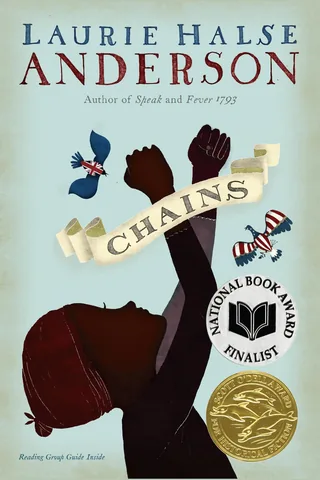
Chains
Laurie Halse Anderson
A reading recommendation to explore alongside the amendments.
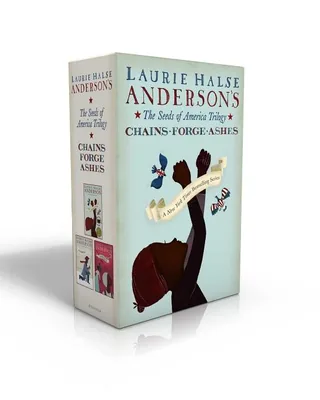
The Seeds of America Trilogy (Boxed Set)
Laurie Halse Anderson
A reading recommendation to explore alongside the amendments.
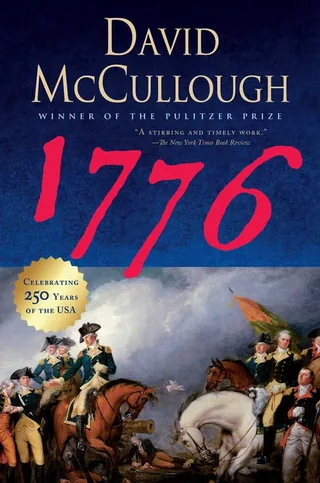
1776
David McCullough
A reading recommendation to explore alongside the amendments.
Scott Somers. I taught middle school in Glennallen, Alaska, and now I build personalized curriculum through Next Chapter Homeschool. On TikTok and YouTube I am The Accidental Teacher in Alaska. This site is where the things I make get a permanent address, so a square printed in the back of a booklet still works in five years.
The useful stuff goes on the blog, One Size Fits One: what homeschooling actually costs, how to tell if it is the curriculum or your child, how to choose without drowning. Put your email here and you get one email when a new post goes up, and word when the next Constitution Day thing exists. No drip, nothing you did not ask for.